EN
EN

News
Is Your Chiller's TXV Killing Your Compressor? (And How to Stop It)
If you manage an industrial chiller or mold temperature control system, you've probably heard the term thermostatic expansion valve (TXV or TEV). But here's the truth most equipment owners don't realize until it's too late: this small component is the single most critical protection device for your most expensive system component—the compressor.
A malfunctioning TXV doesn't just reduce cooling efficiency. It can destroy your compressor in a matter of hours, costing you thousands of dollars in unplanned downtime and replacement parts.
So let's cut through the technical jargon. Here's exactly what a thermostatic expansion valve does, why it matters for your industrial refrigeration system, and how to tell if yours is failing.
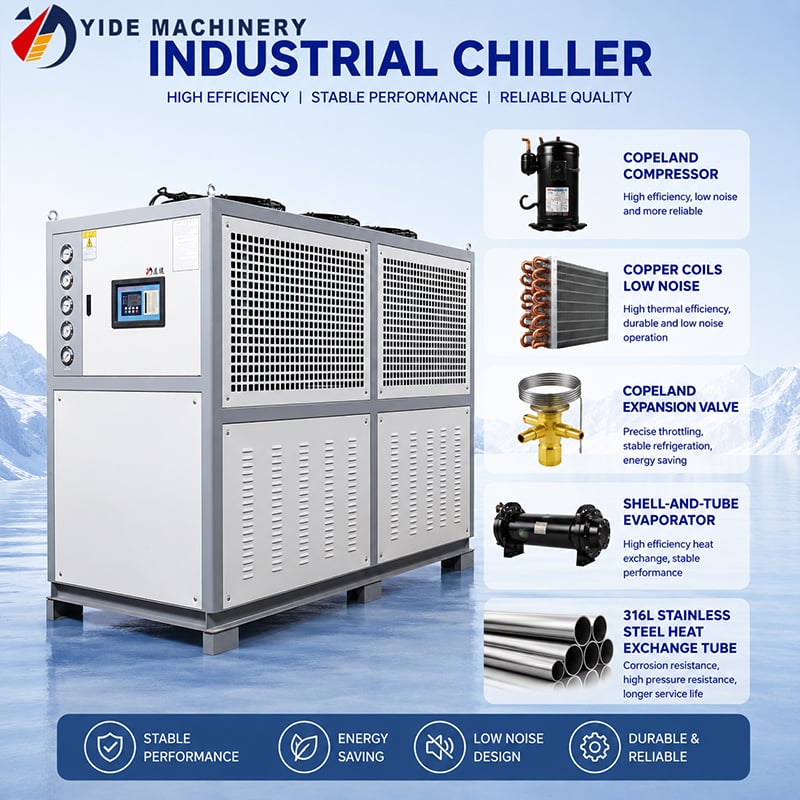
What Does a Thermostatic Expansion Valve Actually Do?
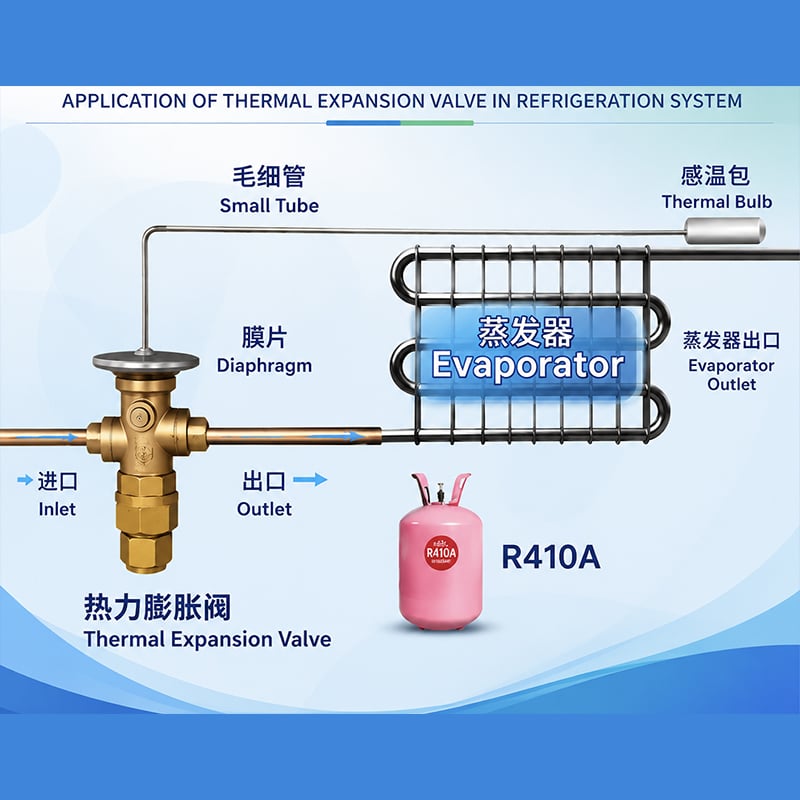
Installed at the inlet of the evaporator, the TXV serves one primary function: precisely controlling the flow of refrigerant into the evaporator coil. It ensures that the right amount of refrigerant enters the evaporator to maintain the desired cooling effect while preventing two disastrous outcomes:
- Too much refrigerant → liquid refrigerant returns to the compressor ( liquid slugging ), causing catastrophic mechanical damage
- Too little refrigerant → inefficient cooling, wasted energy, and compressor overheating
In short, the TXV is the gatekeeper of your entire refrigeration cycle.
The Closed-Loop Logic: How a TXV "Thinks"
What makes the thermostatic expansion valve remarkable is its self-regulating, closed-loop control mechanism. No electronics, no external power—just pure mechanical intelligence.
Here's the step-by-step logic:
1. SENSE – A sensing bulb attached to the evaporator outlet monitors the temperature of the suction line, detecting changes in superheat.
2. RESPOND – When the evaporator outlet temperature rises (indicating higher superheat), the pressure inside the sensing bulb increases. This pressure is transmitted through a capillary tube to the valve's diaphragm, pushing it downward.
3. ACT – The diaphragm moves the valve pin downward, opening the valve wider. More refrigerant flows into the evaporator.
4. BALANCE – The increased refrigerant flow absorbs more heat, lowering the evaporator outlet temperature and bringing superheat back to its set point. When temperature drops, the process reverses—the valve closes slightly to reduce flow.
This continuous dynamic adjustment happens in real time, responding to changing cooling loads without any human intervention.
The Refrigerant Journey: Before and After the TXV
To truly appreciate what the TXV does, you need to understand the refrigerant state change it creates:
| Stage | Location | Refrigerant State |
| Before TXV | Liquid line (valve inlet) | High-temperature, high-pressure liquid |
| After TXV (Throttling) | Expansion device outlet | Low-temperature, low-pressure liquid-vapor mixture |
| After Evaporator | Evaporator outlet | Superheated vapor (ready for compressor suction) |
The TXV creates the pressure drop that transforms high-pressure liquid into a low-pressure mixture capable of absorbing heat in the evaporator. Without this precise metering, the entire refrigeration cycle breaks down.
Why This Matters for Your Bottom Line
If you're operating industrial chillers, process cooling systems, or mold temperature controllers, here's what a properly functioning TXV delivers:
✅ Compressor protection – Prevents liquid slugging that can bend valve plates, break connecting rods, or seize bearing
✅ Energy efficiency – Proper superheat control ensures the evaporator is fully utilized, reducing compressor run time and electricity costs
✅ Consistent process temperatures – Stable cooling means consistent product quality in plastic injection molding, food processing, and chemical manufacturing
✅ Extended equipment lifespan – Reduced wear on the compressor and other refrigeration system components
Common TXV Failure Signs You Shouldn't Ignore
Here are the red flags that indicate your thermostatic expansion valve may be failing:
| Symptom | Likely Cause |
| Low superheat + high suction pressure | Sensing bulb loose, improperly mounted, or poorly insulated |
| High superheat + low suction pressure | Valve underfeeding—possible inlet screen blockage or loss of power element charge |
| TXV hunting (cycling open/closed) | Poor sensing bulb placement or contamination |
| System running but not cooling properly | Dirty blockage or ice blockage in the valve |
| Compressor short-cycling or overheating | Liquid refrigerant returning to compressor ( liquid slugging ) |
> Pro Tip: If you suspect TXV issues, start by checking the sensing bulb placement. It should be on a clean, horizontal section of the suction line, securely strapped with copper or stainless steel straps. Then measure subcooling at the condenser outlet and superheat at the evaporator outlet before making any adjustments.
TXV vs. EEV: Which One Do You Need?
While electronic expansion valves (EEVs) offer more precise control and are increasingly used in high-end systems, thermostatic expansion valves remain the workhorse of industrial refrigeration for good reason:
| Feature | TXV (Thermostatic) | EEV (Electronic) |
| Power source | None (mechanical) | Electrical |
| Cost | Lower | Higher |
| Reliability | Proven, decades of field data | Dependent on sensors and controllers |
| Best for | Most industrial chiller applications | Variable-load, high-precision systems |
For the vast majority of industrial cooling applications, a quality TXV from a reputable manufacturer delivers the perfect balance of reliability, cost-effectiveness, and performance.
Final Thought: Don't Overlook the Gatekeeper
In the world of industrial refrigeration and process cooling, it's easy to focus on the big-ticket items—the compressor, the condenser, the evaporator. But the thermostatic expansion valve is the component that makes all of them work together efficiently.
A failing TXV doesn't just waste energy. It kills compressors. And compressor replacement is one of the most expensive repairs you'll ever face.
Next step: When was the last time your TXV was inspected? If you can't answer that question, it's time to schedule a maintenance check
Need help selecting the right thermostatic expansion valve for your industrial chiller or mold temperature controller? Contact our team for expert guidance on TXV superheat adjustment, replacement, and system optimization.