EN
EN

News
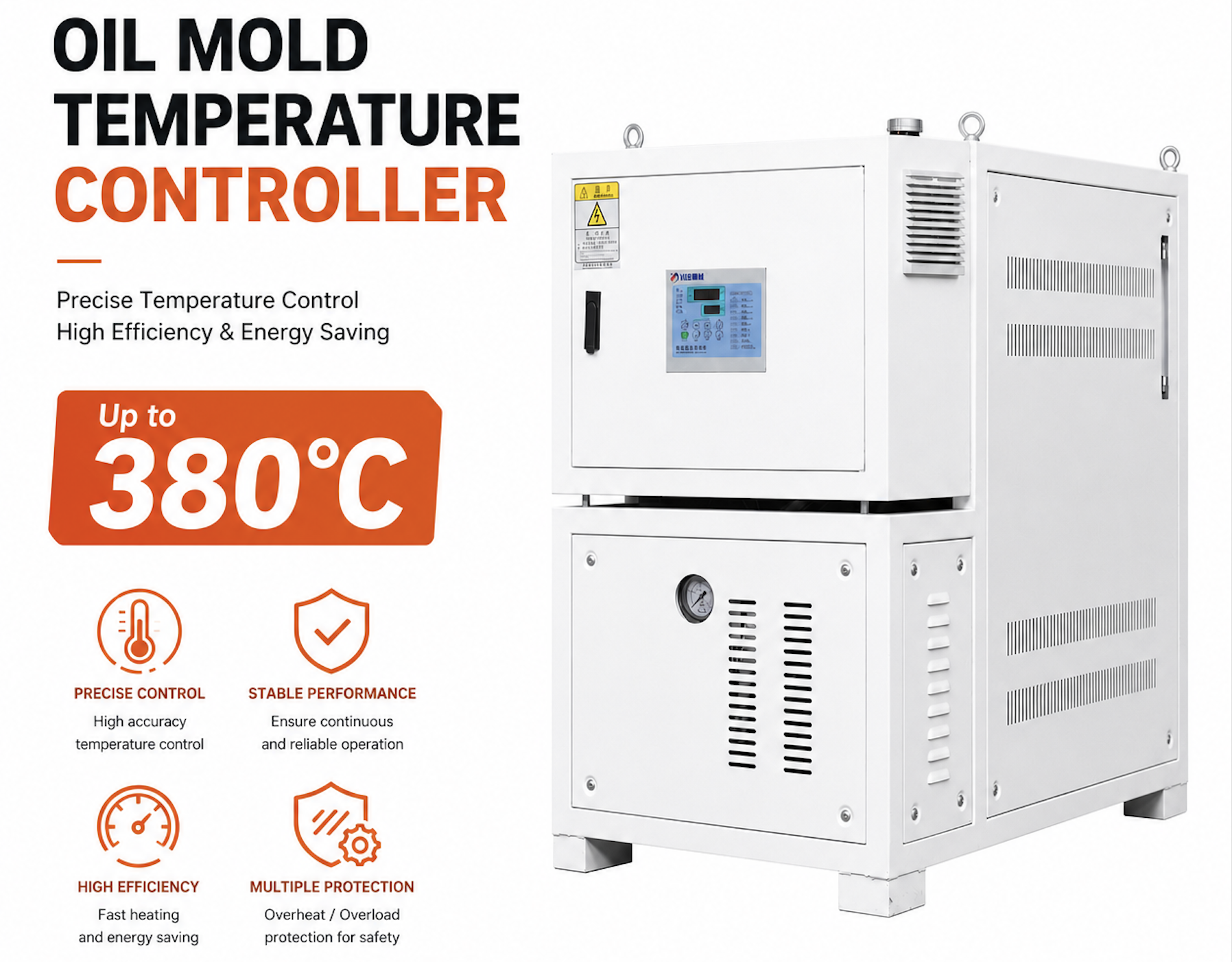
When a Customer Asks for a 380°C MTC, We're Not Just Talking
About "High Temperature"
In this industry, we often get asked, "What's the maximum temperature your units can reach?" Usually we answer "220°C for standard models," and that's the end of the conversation. But a recent inquiry from a customer in Mexico made things a lot more interesting.
He wanted to use an oil mold temperature controller on a die-casting machine, and he needed 380°C.
To be fair, 380°C isn't outrageous in the die-casting industry. Aluminum die casting typically requires mold temperatures of around 180–220°C, but for special processes or magnesium die casting, the requirements can be higher. The key point is this: being able to heat oil to 380°C and being able to run a system reliably at 380°C without problems are two completely different things.
Today, let's use this case to talk about the "invisible costs" behind high-temperature MTCs.
220°C vs. 380°C: It's Not Just 160 Degrees
A standard MTC rated for 220°C uses a relatively mature configuration of pumps, piping, and seals. But once you push the temperature to 380°C, the entire material logic of the system changes.
First, the oil pump. At 380°C, the viscosity, lubricity, and aggressiveness of the heat transfer oil toward sealing materials are completely different from those at 220°C. The mechanical seals on a standard pump will age rapidly at high temperature, and it won't be long before you start seeing oil seepage. At this temperature range, you need a high-temperature magnetic drive pump or a pump with a specially designed sealing structure — and the cost goes up accordingly.
Then there's the heat transfer oil itself. Not all heat transfer oils can handle 380°C. Most mineral-based heat transfer oils on the market have a maximum operating temperature of around 300–320°C. To reach 380°C, you need a synthetic-based heat transfer oil, which offers better thermal stability and a lower tendency to coke — but at roughly double the price. If a customer tries to cut costs and uses an incompatible oil, the system will be full of carbon deposits before long, and it's only a matter of time before the heating elements burn out.
Then there's the piping and valves. 304 stainless steel piping is the baseline at this temperature, and valves need to be rated for high temperature and pressure as well. The seals in ordinary ball valves will soften and deform at 380°C — you need high-temperature-rated globe valves or valves with special sealing structures.
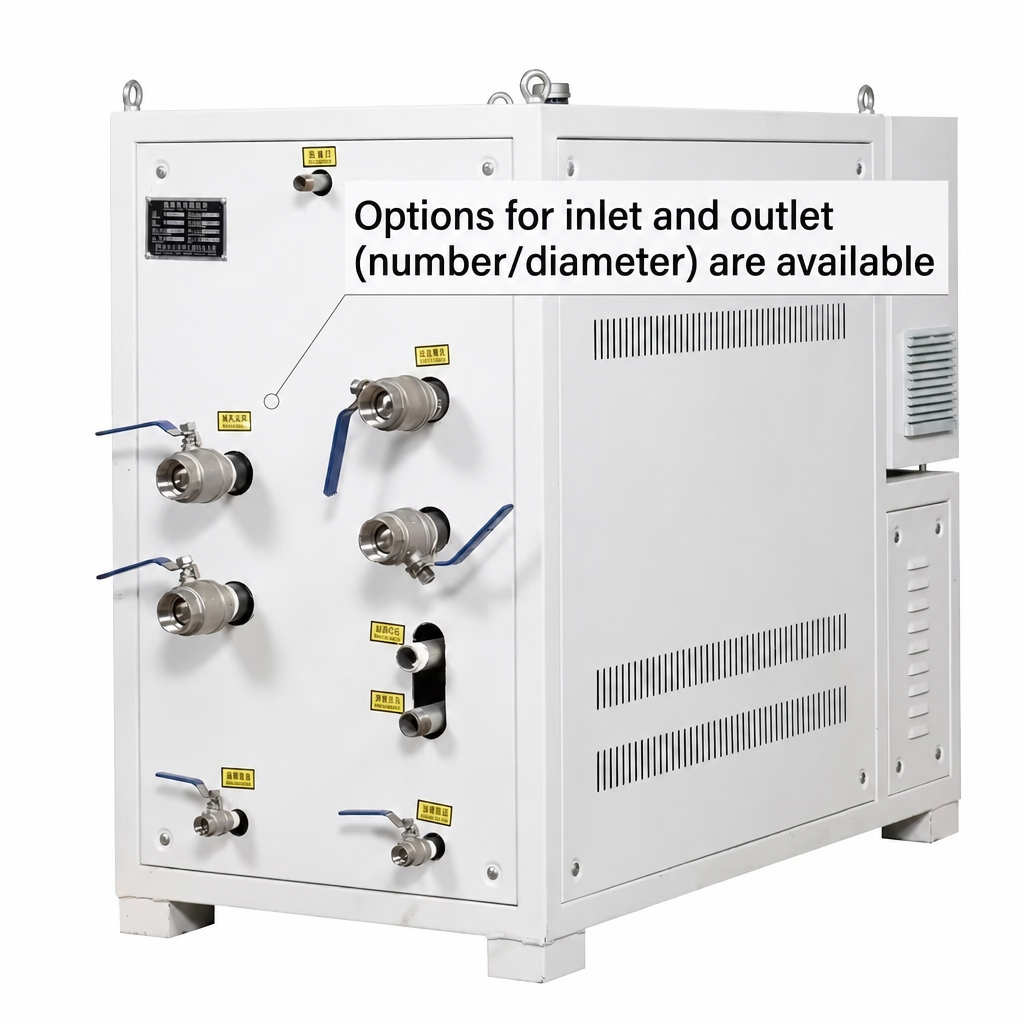
Flange vs. Threaded Connection: That Is the Question
When we got to the connection method, I specifically advised this Mexican customer: for a 380°C application, go with flange connections.
The reason is simple. Threaded connections rely on thread engagement plus sealing material (PTFE tape, sealant) to prevent leaks. But at 380°C, thermal expansion of the metal can create tiny gaps in the threaded joint, while the high temperature accelerates the aging and failure of the sealing material. Once oil leaks, 380°C heat transfer oil contacting the air is not just a matter of "a few drops of oil" — while the auto-ignition point of heat transfer oil is typically between 350–400°C, the flash point of oil that has aged at high temperature for extended periods will drop, and a leak itself is a major safety hazard.
The advantage of a flange connection is that sealing is achieved by a gasket at the mating face, held in place by bolt preload. Even with thermal expansion, the elastic deformation of the bolts can compensate to some extent, so the sealing face stays in contact. With a graphite gasket wrapped in metal mesh, performance remains stable at high temperature and pressure.
What if the customer insists on threaded connections?
It's not absolutely impossible, but the sealing material must be changed. Ordinary PTFE tape decomposes directly at 380°C — you'd need to switch to a high-temperature-resistant sealant or specialty sealing material. But honestly, a threaded connection at this temperature is like running a regular tire on an F1 track — it can run, but you'll be on edge the whole time.
The "Hidden Threshold" of High-Temperature MTCs
It's not just the pump and piping. For a 380°C unit, electrical components need to be kept away from heat sources, and the control cabinet requires special thermal management — otherwise, electronic components exposed to high temperatures over the long term will have significantly shortened lifespans. The surface load of the heating elements must be carefully controlled, or localized overheating will cause the heat transfer oil to crack and coke. Even the expansion tank design needs to account for high-temperature oil vaporization.
Users don't see these things, but they determine whether the equipment is merely "functional" or actually "built to last."
The Point I Want to Make
If you're selecting a high-temperature MTC — whether 350°C or 380°C — don't just focus on the "maximum temperature" number.
Ask your supplier a few more questions: What's the pump configuration? What heat transfer oil grade is specified? What connection method do you recommend? What are the temperature ratings for the piping and valves?
A supplier who can answer these questions in detail is likely to build equipment that won't let you down.
In industrial equipment, at the end of the day, it's a business of "fewer problems."