EN
EN

HABERLER
Ayrık Soğutucu: Hassas Ekipmanlar İçin Sessiz ve Serin Bir Soğutma Çözümü
Laboratuvarlarda, araştırma enstitülerinde ve yüksek hassasiyetli endüstriyel üretim ortamlarında ekipman soğutması temel bir zorluktur. Ancak geleneksel tek parça soğutucular genellikle çalışma alanını rahatsız edebilecek istemsiz ısı ve gürültü üretir. Ayrık soğutucu bu soruna yönelik bir çözüm olarak ortaya çıkmıştır.
Ayrık Soğutucu Nedir?
Bölünmüş soğutucu, soğutma sistemini iki ayrı üniteye bölen bir soğutma cihazıdır: iç ünite ve dış ünite. İç ünite, soğutulması gereken ekipmanların yakınına yerleştirilirken, dış ünite bina dışına yerleştirilir. Bu iki ünite, tam bir soğutma sistemi olarak birlikte çalışabilmeleri için soğutucu boruları ve elektrik kablolarıyla birbirlerine bağlanır. Temel tasarım felsefesi oldukça basittir: ısıyı ve gürültüyü dışarıda tutun ve iç ortamı sessiz ve serin bırakın.
İç Ünite ve Dış Ünite: Mükemmel Bir Ortaklık
Bölünmüş soğutucunun iç ve dış üniteleri, açıkça tanımlanmış rolleri vardır ve her biri kendi temel görevlerini yerine getirir.
İç Ünite: Sıcaklık Kontrolü ve Dolaşımın Merkezi
İç ünite genellikle soğutulması gereken ekipmanlara yakın yerleştirilir. Görevi, ısıyı emmek ve ekipmana soğuk sıvı sağlamakdır. Önemli bileşenleri şunlardır:
- Buharlaştırıcı: İç ünitenin "kalbi"dir. Sıvı soğutucu madde, boruların içindeki soğutma akışkanından (su veya su-glikol karışımı) ısı emerek buharlaşır ve böylece sıcaklığı düşürür.
- Dolaşım su pompası: Soğutulacak ekipmanlardan geçen ve soğutucuya geri dönen soğutma akışkanını tam dolaşım devresi boyunca hareket ettirir.
- Yalıtımlı su deposu: Su devresinin kararlı çalışmasını sağlamak amacıyla bir tampon görevi görür, basınç dengesini sağlar ve su ilavesi için bir nokta oluşturur.
- Kontrol sistemi: Su sıcaklığı, basınç, debi ve diğer parametreleri gerçek zamanlı olarak izleyen ve kompresörün çalıştırılmasını/durdurulmasını ile pompa hızını hassas şekilde ayarlayan akıllı kontrol merkezidir. Genellikle kolay kullanım için bir mikrodenetleyici veya dokunmatik ekranlı insan-makine arayüzü ile donatılmıştır.
- Yardımcı bileşenler: Su devresini temiz ve güvenli tutmak amacıyla filtreler, güvenlik valfleri, basınç göstergeleri ve su doldurma bağlantı noktalarını içerir.
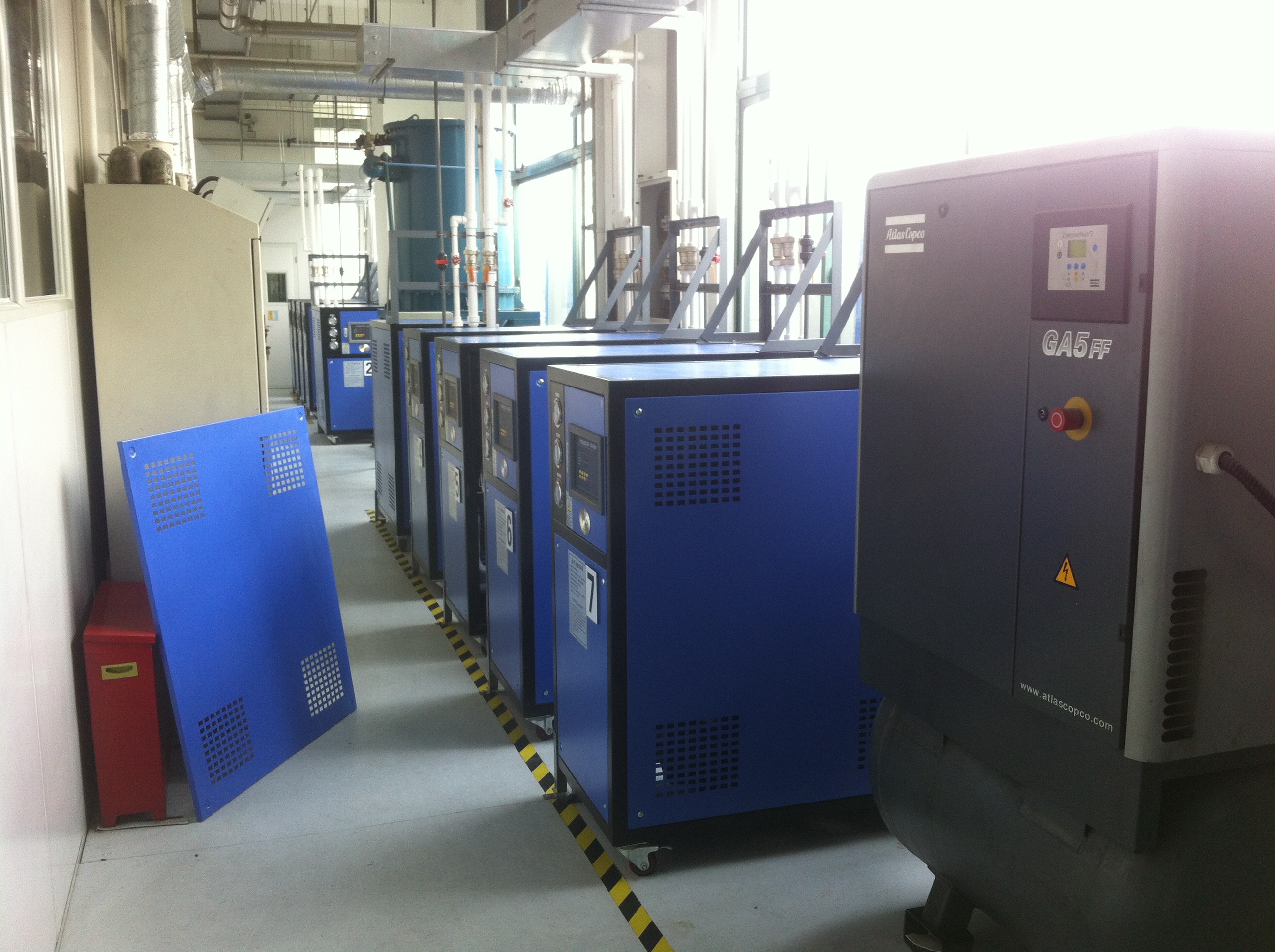
Dış Ünite: Güç ve Isı Dağıtımı
Dış ünite genellikle iyi havalandırılmış bir dış mekânda kurulur. Soğutucu akışkanı sıkıştırmak ve ısıyı atmosfere atmakla görevlidir. Temel bileşenleri şunlardır:
- Kompresör: Tüm soğutma sisteminin "motoru" ve dış ünitenin temel güç kaynağıdır. Düşük basınçlı gaz soğutucu akışkanı, yüksek sıcaklıkta ve yüksek basınçlı gaza sıkıştırarak yoğunlaşmanın gerçekleşmesi için gerekli koşulları oluşturur. Split soğutucu sistemlerinde genellikle spiral (scroll) kompresörler kullanılır; Copeland (ABD), Danfoss (Danimarka) ve Sanyo (Japonya) gibi tanınmış markalar bu alanda öne çıkar.
- Kanatlı borulu kondenser: Burada yüksek sıcaklıkta ve yüksek basınçlı gaz soğutucu akışkanı, zorlamalı konveksiyon yoluyla dış hava ile ısı değiştirerek çevreye ısı verir.
- Kondenser fanı (eksenel fan): Hava hareketini hızlandırarak kondenserin ısı değiştirme verimini artırır.
- Alıcı tank: yoğunlaşmış sıvı soğutucuyu depolar ve sisteme istikrarlı bir besleme sağlar.
Bölünmüş Soğutucu vs. Geleneksel Hava Soğutucu Soğutucu (All-in-One)
Geleneksel bir hava soğutmalı soğutucu (aynı zamanda bir bütününde soğutucu olarak da adlandırılır) tüm bileşenleri tek bir dolaba entegre ederken, bölünmüş soğutucu sistemi iki ayrı birime ayırır. İşte temel farklılıklar:
| En-boy | Çatlak Soğutucu | Hava soğutmalı soğutucu |
| Düzenleme | İçeride bulunan birim + dışarda bulunan birim, borular ve kablolarla bağlantılı | Tüm bileşenler tek bir dolaba entegre |
| Isı Reddi | Tüm ısı dışarıda atılır; odanın içinde ısı yükü yoktur | Sıcaklık soğutucu bulunan odaya salınır |
| Gürültü seviyesi | İç mekan ünitesi son derece sessizdir (30-40 dB kadar düşük) | Kompresör ve fan gürültüsü, çalışma alanında yoğunlaşır |
| Montaj | İç mekân ve dış mekân ünitelerinin ayrı olarak kurulması; borulama için erişim gerektirir | Tek bir ünite yerleştirilebilir, elektrik ve su hatlarına bağlanabilir ve doğrudan kullanılabilir |
| Başvuru | Laboratuvarlar, hassas ölçüm aletleri, iç mekânda katı gereksinimlerin olduğu ortamlar | Genel endüstriyel atölyeler, kimyasal işleme, gıda üretimi vb. |
Ayrık Soğutucuların Temel Avantajları
1. Üstün İç Mekân Çevre Kalitesi
Kompresör, kondenser ve fan gibi gürültü ve ısı kaynaklarını dış mekâna taşıyarak iç ünitenin yalnızca düşük gürültülü su pompası ve kontrol sistemi kalır. Bu sayede iç mekândaki ısı üretimi neredeyse tamamen ortadan kalkar ve çalışma alanındaki gürültü büyük ölçüde azalır.
2. Yüksek Hassasiyetli Sıcaklık Kontrolü
Ayrık soğutucular, mikrodenetleyici veya PID akıllı kontrol kullanır ve sıcaklık kararlılığını ±0,1 °C’ye kadar sağlar; kontrol aralığı genellikle 5 °C ile 35 °C arasındadır. Bu özellik, hassas ölçüm aletlerinin katı gereksinimlerini karşılar.
3. Kapsamlı Güvenlik Korumaları
Bu üniteler genellikle faz kaybı koruması, ters faz koruması, kompresör aşırı yük koruması, fan aşırı yük koruması, pompa aşırı yük koruması, yüksek/düşük basınç kesme koruması, toprak kaçak koruması, düşük su uyarısı ve kompresör için kısa devre önleme koruması gibi çoklu güvenlik özelliklerine sahiptir.
4. Esnek Kurulum ve Bakım
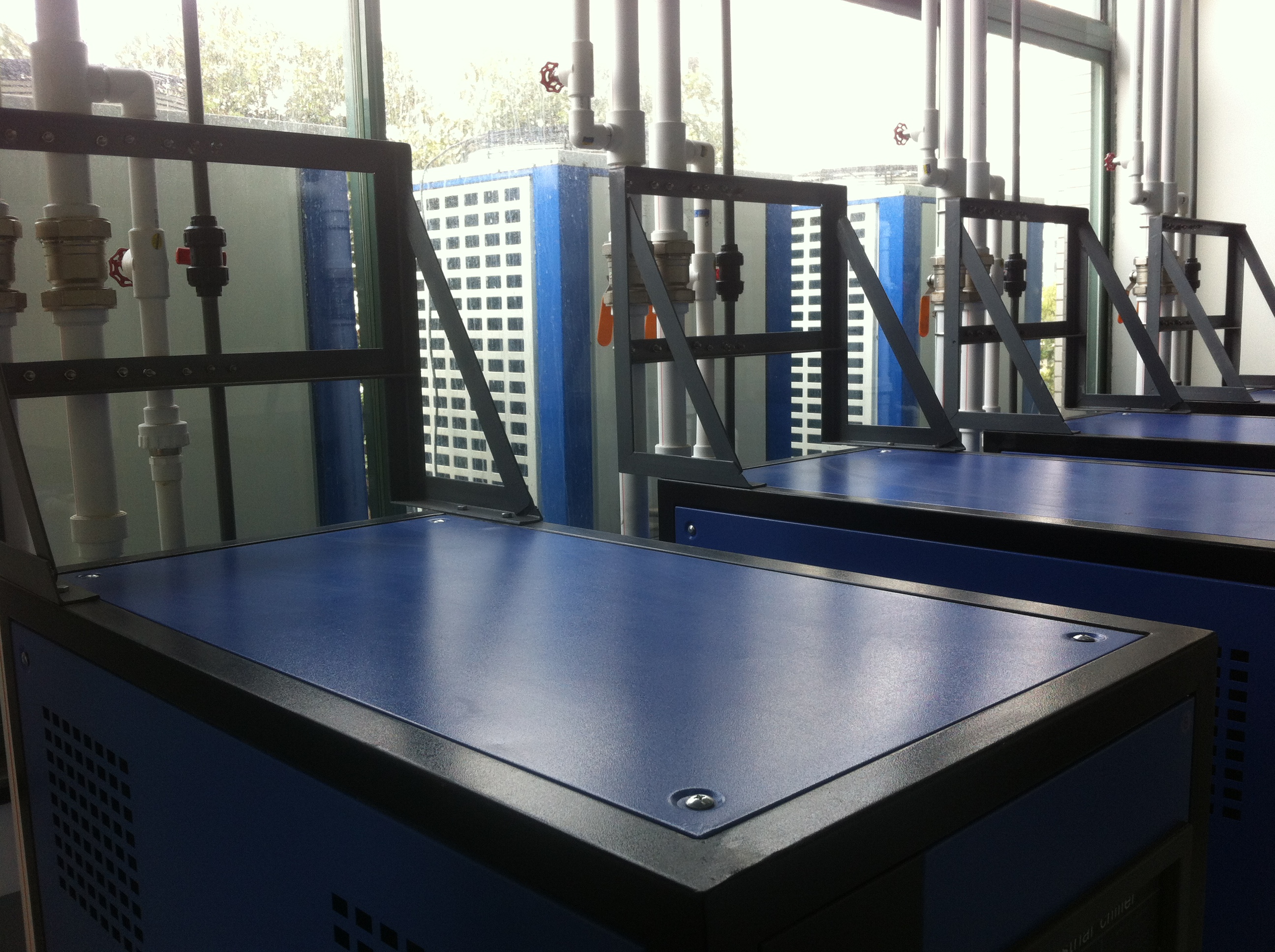
30 kW altı kapasiteli dış ünitelerin kalınlığı yaklaşık 390 mm olabilir; bu da onları özel bir makine odası gerektirmeden balkonlara, çatılara veya zemin alanlarına monte edilmesini sağlar. Hem iç hem de dış ünitelerde bakımı kolaylaştırmak için çıkarılabilir paneller bulunur. Toplam ağırlık orta düzeydedir ve birçok ünite asansörle taşınabilir.
5. Kış Dönemi Donma Koruması (Özellikle Kuzey Bölgelerinde)
Su devresi (iç ünite) iç mekânda tutulduğu için kış aylarında borularda donma riski temelde azaltılır. Bazı modeller ayrıca düşük sıcaklıkta çalışma için krank mili ısıtıcılarına ve farklı iklim koşullarına bölgeye göre uyum sağlamak için değişken fan hız kontrolüne sahiptir.
Tipik Uygulamalar
Düşük gürültü seviyeleri ve iç mekânda düşük ısı atımı nedeniyle split soğutucular şu alanlarda yaygın olarak kullanılır:
- Laboratuvar hassas cihazları: X-ışını kırınımölçerler (XRD), X-ışını floresans spektrometreleri, geçiş elektron mikroskopları (TEM), plazma aşındırıcılar, atomik absorpsiyon spektrometreleri, oksijen/azot analizörleri vb.
- Lazer ve optik ekipmanlar: Laserler, helyum kompresörleri, GM soğutucuları, PPMS (Fiziksel Özellik Ölçüm Sistemi) vb.
- Vakum ve kaplama ekipmanları: Vakum kaplama cihazları, iyon kaplama sistemleri, vakum fırınları, endüstriyel fırınlar vb.
- Büyük endüstriyel makineler: Yorulma test cihazları, büyük lehimleme fırınları, yüksek frekanslı indüksiyon fırını soğutma sistemleri ve daha fazlası.
Sonuç
Akıllı bölünmüş tasarım mimarisi sayesinde, bölünmüş soğutucu, soğutma sisteminin "gürültüsünü ve ısısını" iç ortamdan etkili bir şekilde izole eder; böylece hassas ekipmanlar ve araştırmacılar için sessiz, konforlu ve serin bir alan oluşturur. Laboratuvarınız ya da üretim atölyeniz geleneksel soğutucuların termal ve akustik zorluklarıyla mücadele ediyorsa, bölünmüş soğutucu aradığınız çözüm olabilir.