EN
EN

YANGILIKLAR
Dinamometrni sovutish: Nima uchun nam-bulb harorati 40°C ga yetganda sovutish minorasi ishlamay qoladi
Sanoat sovutishida muhim tamoyilni ochib beradigan haqiqiy mijoz suhbati
Oxirgi vaqtlarda bir mijoz dinamometr uchun sovutish talabini bilish uchun bizga murojaat qildi. Parametrlar oddiy ko'rinardi:
- Kirish suvining harorati: 40°C
- Chiqish suvining harorati: 25°C
- Oqim tezligi: 6000 L/soat (6 m³/soat)
U so'radi: "Sovutish minorasi ishlaydimi?"
Biz mahalliy iqlim sharoitlari haqida so'radik. Uning javobi: "Nam termometri harorati 40°C."
Shu paytda sovutish minorasi yechimi butunlay rad etildi. Yagona amal qiladigan variant — sovutgich.
Ushbu maqola nimaga shunday bo'lganini tushuntiradi — shuningdek, dinamometrni sovutish uchun sovutish minoralari, nam termometri harorati va sovutgichlar bo'yicha asosiy tamoyillarni qamrab oladi.
1. Nima uchun dinamometrga kuchli sovutish kerak?
Dinamometr (yoki "dyno") dvigatellarning, elektr dvigatellarning yoki boshqa aylanuvchi uskunalarining buruvish momenti, tezlik va quvvatini o'lchaydi.
Viyutuvchi tokli va gidravlik dinamometrlar ayniqsa talab qiluvchi: ular yutgan deyarli butun mexanik quvvatni issiqlikka aylantiradi.
- Masalan: 100 kW li dvigatelga to'liq yuk ostida sinov o'tkazilganda, dinamometr taxminan 100 kW issiqlik chiqaradi.
- Samarali issiqlikni olib tashlamaslik holatida dinamometr qizib ketadi → o'lchov siljishi → komponentlarning shikastlanishi yoki ishlamay qolishi.
Shu sababli, dinamometr sinov hujayralari uchun ishonchli sovutish tizimi majburiydir. Eng ko'p uchraydigan ikkita yechim — sovutish minoralari va suv bilan sovutiladigan chillerga asoslangan tizimlardir.
2. Sovutish minorasi: Arzon, lekin halokatli cheklovga ega
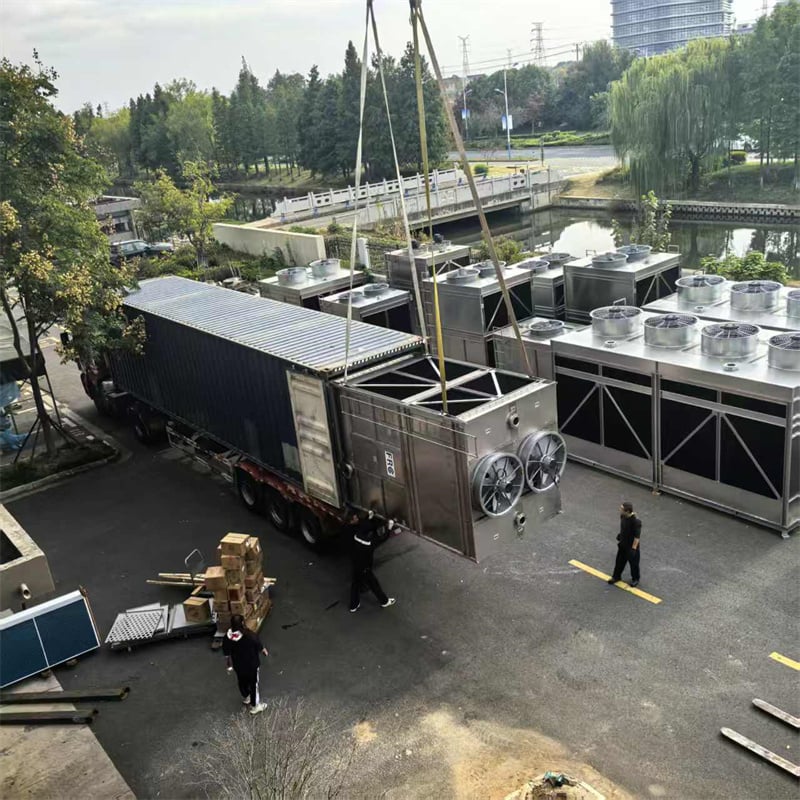
Sovutish minorasi bug'lanish orqali issiqlikni olib tashlaydi. Issiq suv to'ldiruvchi materiallar ustiga pishiriladi, havo esa ulardan o'tadi. Suvning kichik qismi bug'lanadi, bu esa yashirin issiqlikni yutadi va qolgan suvning haroratini pasaytiradi.
"Achillesning sevgi qo'li" — nam termometr harorati
Nam termometrik harorat — bu psixrometrik xususiyat. Oddiy tilda aytganda: bu bug'lanish orqali sovutish bilan erishilishi mumkin bo'lgan eng past harorat.
- Agar atrof-muhitning nam termometrik harorati 28°C bo'lsa, sovutish minorasi 28°C dan sovuqroq suv ishlab chiqara olmaydi (amalda amaliy chegarasi nam termometrik harorat + 3–5°C).
- Agar nam termometrik harorat 40°C bo'lsa, nazariy jihatdan eng past chiqish harorati ≥43°C (g'oyal sharoitlarda 3°C yaqinlashish).
Mijozning maqsad qilgan chiqish harorati — 25°C, ya'ni nam termometrik chegaradan to'liq 18°C past.
Bunday natijaga hech qanday sovutish minorasi erisha olmaydi — hajmi yoki narxi qanday bo'lmasin. Bug'lanish orqali sovutish qonunlari buni jismoniy jihatdan mumkin emas qiladi.
Asosiy mulokot: Sovutish minorasining chiqish harorati doim atrof-muhitning nam termometrik haroratidan yuqori bo'ladi.
3. Suv bilan sovutiladigan chillerni: iqlimga bog'liq bo'lmagan, aniq sovutish
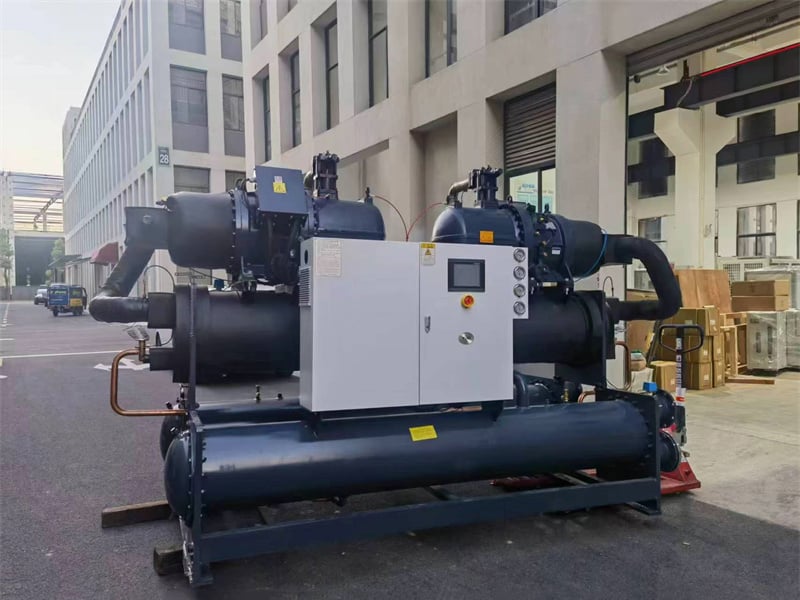
Suv bilan sovutiladigan sovutgich bug'lanish-siqrilish sovutish tsiklidan foydalanadi (siqgich, bug'latgich, kondensator, kengaytirish klapani) — bu konditsioner yoki sovutgichning ishlash prinsipi bilan bir xil.
- Atrof-muhitning nam termometrik harorati sovutilgan suv chiqish haroratini ta'sirlamaydi.
Tashqi harorat 40°C yoki 50°C bo'lsin, sovutgich o'rnatilgan 7°C, 15°C yoki 25°C suvni barqaror tarzda yetkazib beradi.
- Sovutgichning kondensatori sovitishni talab qiladi (odatda alohida sovutish minorasi yoki quruq sovutgich orqali), lekin bug'latgich atrof-muhit sharoitlariga qaramasdan boshqariladigan haroratdagi sovutilgan suvni ishlab chiqaradi.
Mijoz talablariga mos keladi (40°C → 25°C, 6 m³/soat)
- Talab qilinadigan sovutish quvvati ≈ 104 kW
- Sovutish minorasi buni amalga oshira olmaydi. Suv bilan sovutiladigan vintli yoki spiral sovutgich bu vazifani osongina bajaradi va takrorlanadigan dinamometr sinovlari uchun muhim bo'lgan ±1°C aniqlikda ishlaydi.
4. Dinamometr sovutish uchun tavsiya etiladigan yechimlar
| Yechim | Mos keladi | Ijobiy tomonlar | Salbiy tomonlar |
| Faqat sovutish minorasi | Nam termometr ko'rsatkichi past (≤28°C) va chiqish haroratining noqat'iy talabi (masalan, faqat <35°C kerak) | Dastlabki xarajat past, ishlatilayotgan quvvat past | Iqlimga bog'liq; yozda chiqish harorati oshadi |
| Faqat suv bilan sovutiladigan sovutgich | Yuqori nam termometr ko'rsatkichi yoki aniq haroratni boshqarish talab qilinadi (masalan, 25°C ±1°C) | Barqaror, aniq, iqlimga bog'liq bo'lmagan | Dastlabki xarajat yuqori, elektr energiyasidan foydalanish yuqori |
| Sovutish minorasi + ketma-ket ulangan sovutgich | Energiya tejab, shuningdek, yozda ishlashni kafolatlaydigan keng dinamometrik laboratoriyalar | Minoraning oldindan sovutish funksiyasi suvni sovutadi, sovutgich esa maqsadga erishish uchun jarayonni yakunlaydi – umumiy samaradorlik eng yaxshi | Murakkabroq tizim, kengroq joy egallashi |
Mijozning holati uchun (nam termometr = 40°C, maqsad = 25°C) yagona amal qiladigan yechim — suv bilan sovutiladigan sovutgich (yoki kondensatsiya suvi mavjud bo'lmasa, havo bilan sovutiladigan sovutgich; ammo yuqori atrof-muhit harorati havo bilan sovutiladigan sovutgichning samaradorligini pasaytiradi).
5. Nima uchun faqat sovutgich qurilmasi sotib olinmaydi?
Sovutgich qurilmasining «tonnaj» reytingi standart sharoitlarda belgilanadi:
- Kirish: 37°C, chiqish: 32°C (ΔT = 5°C), nam termometr: 28°C.
Mijozning ish yuklamasi ΔT = 15°C ni tashkil qiladi — bu standart qiymatdan uch baravar ortiq. Hatto oddiy nam termometr sharoitida ham standart 6 m³/soat quvvatli sovutgich qurilmasi keskin yetishmovchilikka uchraydi; 15–20 m³/soat quvvatli sovutgich qurilmasi kerak bo'ladi.
Lekin nam termometr = 40°C bo'lganda, sovutgich qurilmasining o'lchami qanday bo'lmasin, chiqish harorati 25°C ga yetish mumkin emas. Bug'lanish orqali sovitish fizikasi ishlamay qoladi.
6. Mukofot
- Dinamometrni sovitish — ayniqsa vorteks tokli va gidravlik turdagi dinamometrlar uchun — barqaror, yuqori quvvatli issiqlik chiqarishni talab qiladi.
- Sovutish minoralari faqat quruq, sovuq iqlimda va issiqlik talablari noaniq bo'lganda ishlaydi. Ularning ishlash samaradorligi aniq nam-bulb harorati bilan cheklangan.
- Suv bilan sovutiladigan sovutgichlar nam-bulb haroratiga cheklovlanmaydi. Ular aniq chiqish haroratini (masalan, 25°C) ishonchli tarzda ta'minlaydi va shuning uchun aniq dinamometr sinovlari uchun afzal tanlovdir.
Eslab turing: Agar sizning mahalliy nam-bulb haroratingiz 40°C bo'lsa, sovutish minorasidan 25°C li suv olishni kutish — bu qishda uyning 25°C da qolishini kutishga o'xshaydi, ya'ni isitish qurilmasisiz. Bu fizik qonunlarga zid.
Dinamometr (yoki boshqa sanoat jarayoni) uchun sovutish jihozini tanlaganda doimo quyidagi parametrlarni ko'rsating:
Kirish harorati, chiqish harorati, oqim tezligi, (mahalliy yozgi loyiha nam-bulb harorati).
Biz mijozlarga «arzon, lekin foydalanib bo'lmaydigan» yechimlardan voz kechishga yordam beramiz. Ishonchli va aniq dinamometr sovutish uchun — suv bilan sovutiladigan sovutgichni tanlang.
Sanoat sovutish muhandislik jamoasi tomonidan yozilgan — dinamometrlar, induksion isitish, lazerlar, shprits-presslar va boshqalar uchun aniq harorat nazorati sohasida mutaxassislikka ega.