EN
EN

News
Troubleshooting Guide for Noisy Water Pump in Air-Cooled Chiller
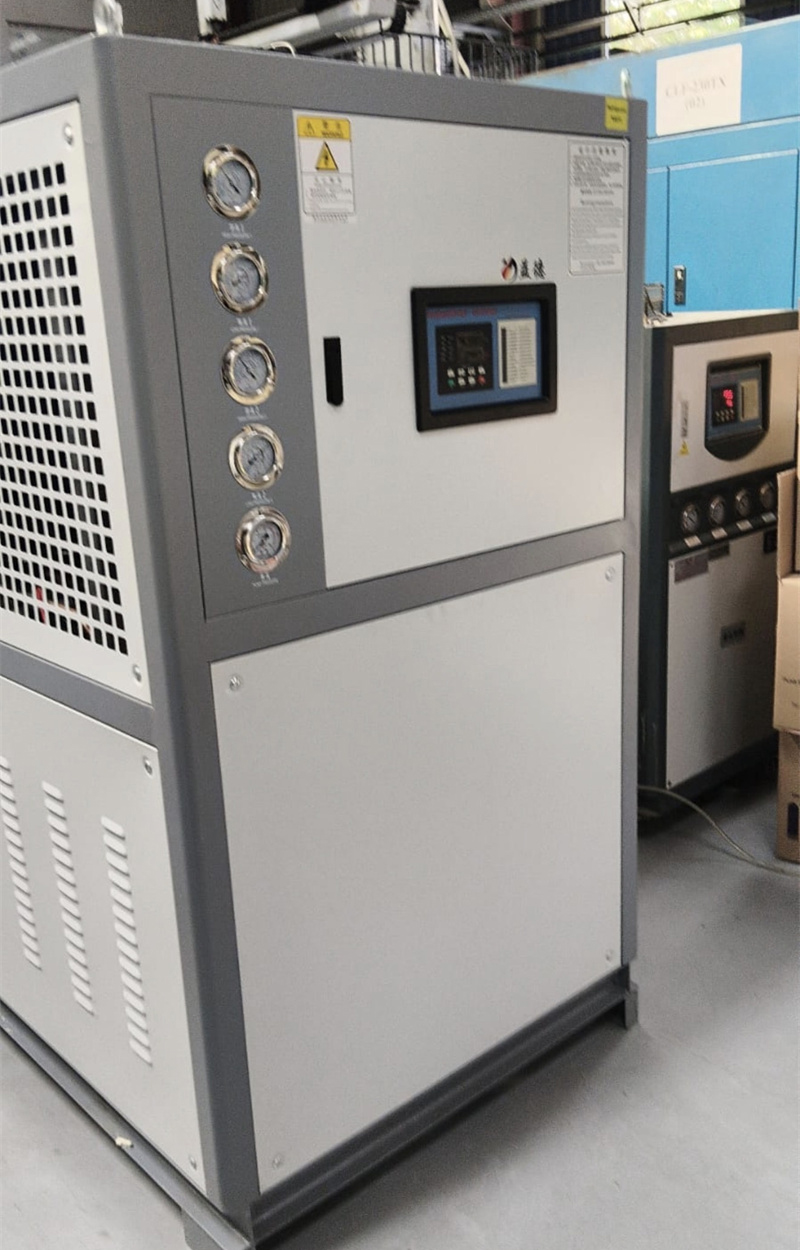
Last Saturday, an air-cooled chiller shipped to Angola had excessive pump noise during initial startup. The customer reported this on WhatsApp, and we immediately began troubleshooting.
Since it was the first test run, there might be air in the system. We asked the customer to observe for a while. The customer then reported the noise was still there, so we continued investigating.
We guided the customer to install a ball valve at the chilled water outlet and throttle it to reduce flow. We also checked whether the motor was running in reverse – under normal conditions, the motor should rotate clockwise.
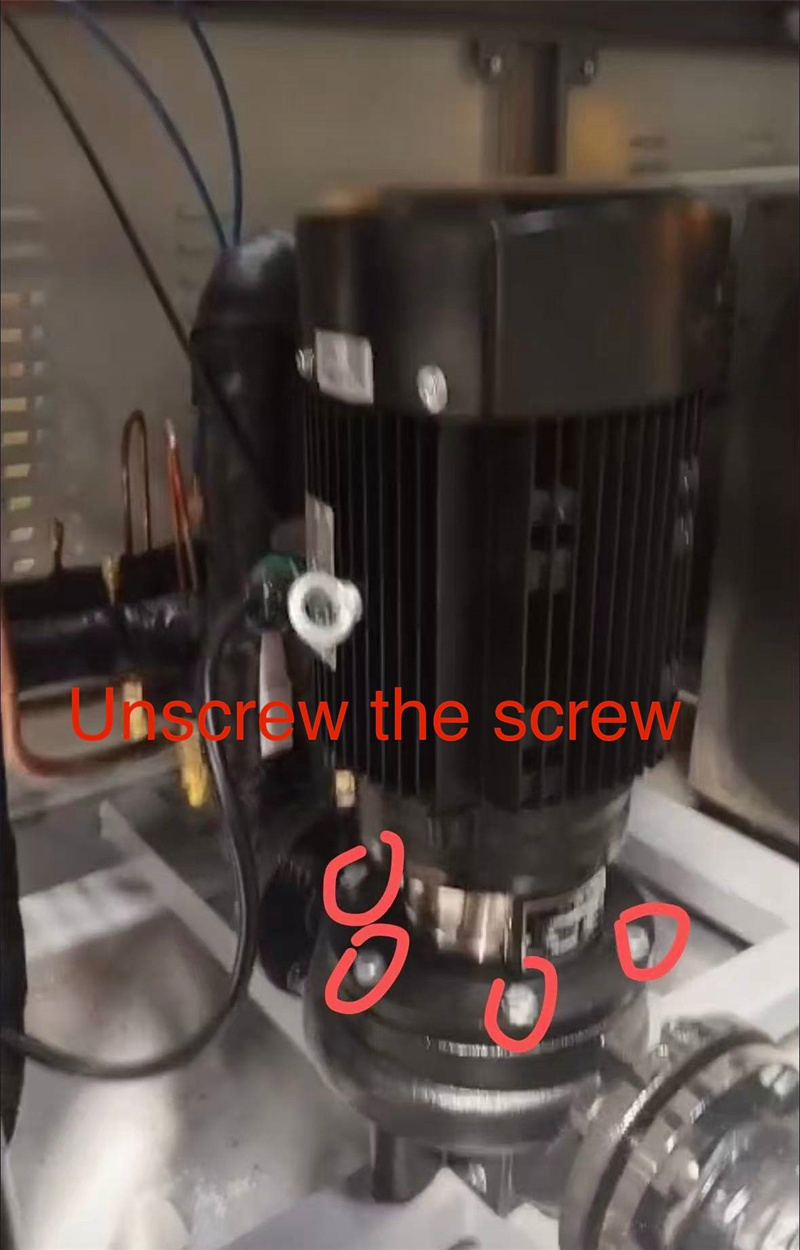
After these steps, the pump noise persisted. We then instructed the customer to remove the screws on the pump (note: this operation does not affect the seal, gears, etc.) to check if something was stuck inside.
Finally, the customer opened the pump and found a foreign object that did not belong to our factory – a small piece of plastic tube had accidentally fallen in when they opened the water tank cover to add water.
After several hours of troubleshooting, we successfully identified the cause of the pump noise.
Pump Noise Troubleshooting Steps:
Check the rated current on the motor nameplate. If the current exceeds this value, investigate further. Overcurrent usually indicates high flow operation, and the motor will also overheat.
1.Check current value: Is it exceeding the rated current on the motor nameplate?
2. If current is exceeded: Check if the voltage is within range – actual 380V, should be within ±10%.
3. Check rotation direction: LD pumps normally rotate clockwise. (View fan rotation from above the motor)
4. Check for high flow operation: Look at the pressure gauge. If the pressure is lower than the number after the pump model, it is running in high flow. (Example: LD50-24/2, 24 is rated head. If site pressure is below 24, it's high flow operation – must throttle valve to 0.24MPa)
5. Remove the fan cover: Manually turn the fan to check if it's tight.
6. If the fan is tight: The pump may be rubbing. If not tight, the pump interior is likely fine, with no damaged parts.
7. Check the medium: If it's thicker than regular tap water, a larger motor may be needed.
If you still suspect the noise is coming from inside the pump, you can remove the screws around the pump to open it and inspect the impeller. In this case, place the pump securely and run it idle to see if there is any abnormal noise. If not, the issue may be insufficient water intake.
Note: Do not touch the impeller while rotating.